 Hildur Sif
Rupert Sheldrake is one of those names that reliably splits a room. To some readers he is a courageous biologist who asked questions orthodox science preferred to leave unasked. To others he is a gifted writer who wandered too far from falsifiability. Either way, his work has lingered in the background of parapsychology, popular science, and the culture wars around what counts as evidence.
This article is a tour through his central ideas — and a showcase post for every interactive tool on Chasing a Rabbit, so you can see how components look inside a real article.
A Cambridge pedigree and an unusual path
Sheldrake was born in Newark-on-Trent, England, on 28 June 1942 — a Cancer sun in the tropical zodiac, for those who track such things:
Cancer
06/21 — 07/22
Today’s reading
Loading…
He studied biology at Clare College, Cambridge, took a PhD in biochemistry, and later held research fellowships at Harvard and Clare. His early career looked thoroughly establishment: plant physiology, hormones, development. The pivot came when he began to argue that biology needed something like memory in nature itself — not only in brains.
That pivot is worth taking seriously even if you reject his conclusions. Developmental biology really does involve forms that repeat with eerie reliability. Embryos unfold into species-typical shapes. Cut a planarian worm and it regrows the right head or tail. How does a living system “know” what to build?
Morphic resonance in plain language
Sheldrake’s most famous proposal is morphic resonance: the idea that natural systems are shaped not only by local chemistry and genes but by morphic fields — organising patterns that carry the memory of what has happened before.
A rough analogy: radio tunes to a station. The signal is non-local relative to the receiver, yet the music is real enough when the dial locks on. Sheldrake suggested species, crystals, and even habits might “tune” into prior instances of the same form. The more often a pattern occurs, the easier it becomes for the next instance to fall into place.
Critics say this replaces one mystery with another. Supporters say it names what everyone already gestures at when they talk about “instinct” or “collective memory” without pretending those phrases are fully explained by DNA alone.
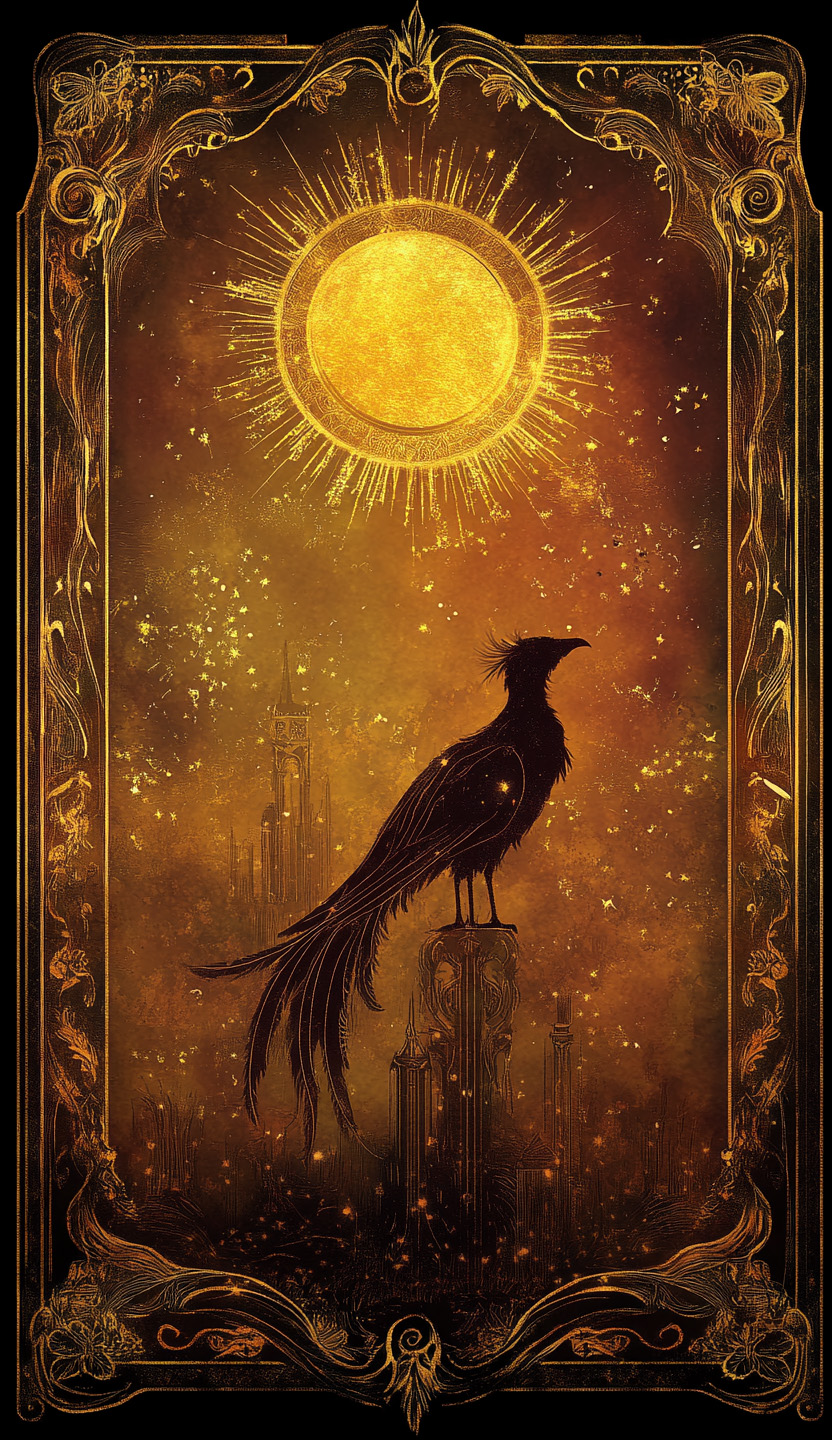
Pull a single card from the deck — for the lone researcher lighting a lamp in territory others avoid:
Turn over a card
Pull a card — click the deck
The experiments people argue about
Sheldrake is rarely discussed without mentioning a handful of studies that became folklore.
Dogs that know when their owners are coming home is the best known. In informal trials and televised demonstrations, dogs seemed to move to the door before the human arrived — even when return times were randomised and the person was still miles away. Skeptics proposed mundane explanations: subtle sound cues, routine, selective memory of hits. Believers countered that the effect survived controls that ruled out obvious triggers.
The sense of being stared at invited strangers to guess whether someone behind them was looking. Hit rates modestly above chance were reported in some setups; null results in others. The fight was never only about numbers — it was about whether such questions deserved laboratory time at all.
Telephone telepathy trials asked subjects to name who was calling before answering. Again: small effects in some analyses, fierce debate over statistics and protocol.
You do not have to adjudicate every claim to see why the pattern matters. Sheldrake forced a question about what evidence would convince you to expand the perimeter of “normal” biology.
A three-card spread — past, present, and what might open next:
Tarot spread
Click each card to draw from the deck — 3 cards, no repeats
Science, religion, and the TED controversy
Sheldrake has also written on prayer, rituals, and the sacred in everyday life — which made some atheist critics treat him as an enemy of the Enlightenment project itself. The TEDx controversy of 2013 crystallised the mood: a talk was flagged as “pseudo-science,” pulled from mainstream TED channels, and debated endlessly online. The episode was less about a single lecture than about who guards the border of respectable speech.
Mainstream biologists often cite the lack of a mechanism for morphic fields. Sheldrake replies that mechanism was once missing for gravity, genes, and plenty else — and that dismissing an observation because the mechanism is unclear is bad epistemology.
Fair readers can hold two thoughts:
- Extraordinary claims need extraordinary evidence.
- Extraordinary dismissal also needs extraordinary care — history is littered with ideas that arrived early and looked silly.
One rune, cast for the thread
The Old Norse rune row is a separate tradition from Cambridge biology, but it fits the mood of this site: symbols that carry weight because people have handled them for centuries. Shake the bag and draw one stone:
Rune cast
Shake the bag to draw your runes — 1 shake, no repeats
A small cast — three stones
A three-stone cast — shake the bag once per stone (labels are prompts for reflection, not prophecy):
Rune cast
Shake the bag to draw your runes — 3 shakes, no repeats
Books that defined the public conversation
If you want Sheldrake in his own words, start with:
- A New Science of Life (1981) — morphic fields introduced to a wide audience.
- The Presence of the Past (1988) — develops the resonance model in more detail.
- Dogs That Know When Their Owners Are Coming Home (1999) — popular report on the homing-and-anticipation research programme.
- The Science Delusion (2012, US title) / Science Set Free — a manifesto against what he calls the “ten dogmas” of modern science.
Read sympathetically, they are clear and often charming. Read critically, underline every place a control could have been tighter.
Star sign lookup (interactive)
Not Sheldrake-specific — but part of the toolkit. Enter any birth date and the component looks up a sun sign and today’s reading client-side:
What’s your star sign?
Enter your date of birth — we’ll look up your sun sign and today’s reading.
Or browse all twelve signs and their daily readings directly:
Daily readings — all signs
Where this site’s ideas connect (starmap)
The graph below is the same starmap used on the mindmap page: categories as nodes, sized for this site’s structure. Click a node to jump to that category. (Requires D3 — loaded on this post via extra_js in front matter.)
Chasing a Rabbit — category starmap
Why he still matters on a blog like this
Chasing a Rabbit sits near the overlap of psi, afterlife culture, mediumship, and the history of odd results that never quite graduate to textbook footnotes. Sheldrake is not a medium and not primarily a survival researcher — but he is part of the same ecosystem of questions:
- Are minds confined to brains?
- Do habits outlive the individuals who started them?
- When does “anecdote” become data?
Pam Reynolds and Summerland posts on this site explore other branches of that tree. Daryl Bem’s precognition work probes yet another. Sheldrake asks whether nature itself might remember.
You do not need to believe morphic resonance to find the question beautiful: what if the universe is less forgetful than we assume?
Further reading and footnotes
Serious engagement means reading both Sheldrake and his critics. Start with reviews in Nature (the infamous “heresy” piece), follow debates in Journal of Consciousness Studies, and compare popular summaries with primary protocols where they still exist.
This post is intentionally long and includes every in-article component: Ko-fi banner (full), tarot card, tarot spread, single rune, rune cast, static star sign, star-sign lookup, starmap, plus Related Topics (via tag_map: true) and Other Articles (always on posts). The inline Ko-fi callout at the bottom of the layout appears automatically — you will see that when previewing the full page.